Silicone Foam Is Protecting Temperature-Sensitive Goods
Introduction
Some of the world's most valuable cargoes are also its most fragile: vaccines that must never freeze, biologics that must never warm, fresh food that must arrive crisp, and pharmaceuticals that lose their power if the temperature wavers even slightly. These goods travel thousands of miles through heat and cold, relying on an invisible system — the cold chain — to protect them at every step. At the heart of that system, liquid silicone foam has become a guardian material, insulating temperature-sensitive products against the brutal conditions of global transit.
Early Developments
In the early days of temperature-controlled logistics, cold chain insulation relied on polyurethane foam and expanded polystyrene. These materials had critical weaknesses. Polystyrene was effective but brittle, crushing under handling and offering no cushioning for fragile contents. Polyurethane absorbed moisture, losing insulation value exactly when it mattered most, and degraded under repeated use. In the pharmaceutical and food industries, where a single temperature excursion can destroy an entire shipment, these limitations translated into lost products, wasted money, and serious public-health risks.
The Platinum Cure Revolution
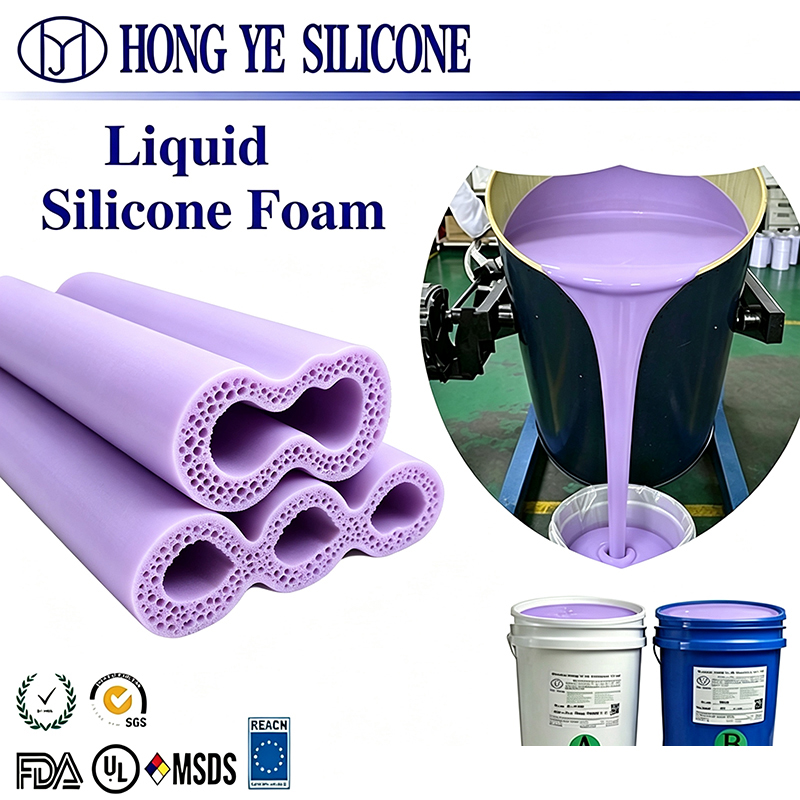
The introduction of platinum-catalyzed addition-curing silicone foam brought a new standard to cold chain protection. Platinum-cured foam's closed-cell structure provides effective thermal insulation while repelling the moisture that destroys conventional insulations. Its wide temperature range performs in both deep-freeze and high-heat environments. Its durability enables reusable cold chain packaging that survives hundreds of trips — transforming both the economics and the environmental impact of temperature-controlled shipping. And its chemical inertness ensures it will never react with or contaminate the precious cargo it protects.
Key Performance Advances
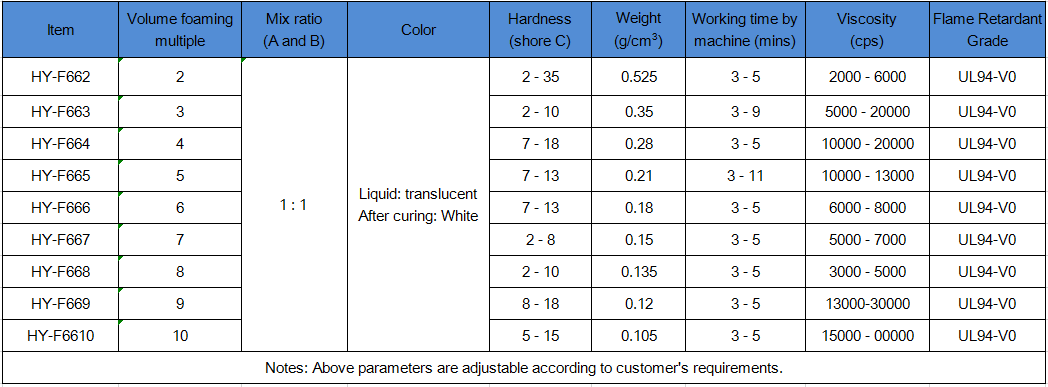
Modern liquid silicone foam grades, such as those produced by Hong Ye Silicone, are engineered for the demands of the cold chain. The material's wide service temperature range of -65°C to 200°C covers the full spectrum of temperature-controlled logistics, from cryogenic shipping to heat-stable transport. Its closed-cell structure provides consistent thermal insulation that resists moisture degradation, maintaining performance through temperature extremes. The excellent rebound resilience protects fragile contents from the shock and vibration of transit. And the material's durability enables reusable packaging systems that reduce both cost and waste — a growing priority in an industry under pressure to become more sustainable.
Application Expansion
Cold chain silicone foam now protects temperature-sensitive goods across the logistics industry. In pharmaceutical logistics, it insulates and cushions vaccines, biologics, and medicines during international shipment, where temperature integrity is a matter of public health. In food logistics, it keeps fresh produce, dairy, and frozen goods at precise temperatures from farm to shelf. In clinical trials, it protects irreplaceable biological samples in transit. In industrial logistics, it maintains the temperature of chemicals and materials that require controlled conditions. In reusable cold chain systems, its durability enables packaging that performs reliably for years. In each application, silicone foam helps protect the goods that people depend on.
Manufacturing Advancements
Cold chain protection demands absolute consistency. Automated production lines, like those operated by Hong Ye Silicone, deliver the tight control over density, cell structure, and insulation properties that temperature-critical applications require. ISO9001-certified quality management, comprehensive laboratory testing, and final inspection before shipment ensure that every batch provides the same reliable protection — because in the cold chain, a single material failure can destroy an entire shipment and everything it carries.
Future Directions
The future of cold chain materials points toward greater intelligence and sustainability. Phase-change silicone foam composites that actively stabilize temperature, sensor-integrated packaging that monitors conditions in real time, and fully recyclable insulation systems represent the most promising research directions. As global trade in temperature-sensitive products expands — and as vaccine and pharmaceutical distribution networks grow — the role of advanced silicone foam in the cold chain will only become more critical.
Conclusion
The modern world moves temperature-sensitive miracles across continents — and it relies on materials that never waver to get them there. Liquid silicone foam has proven itself one of the most dependable of those materials, insulating precious cargoes against heat, cold, and the brutality of transit. Companies like Hong Ye Silicone, with decades of formulation expertise and advanced production capability, are helping shippers, pharmaceutical companies, and food producers around the world protect the goods that health and life depend on.
 ∷
∷