Biosafety Animal Room HEPA Gel Sealing
INTRODUCTION
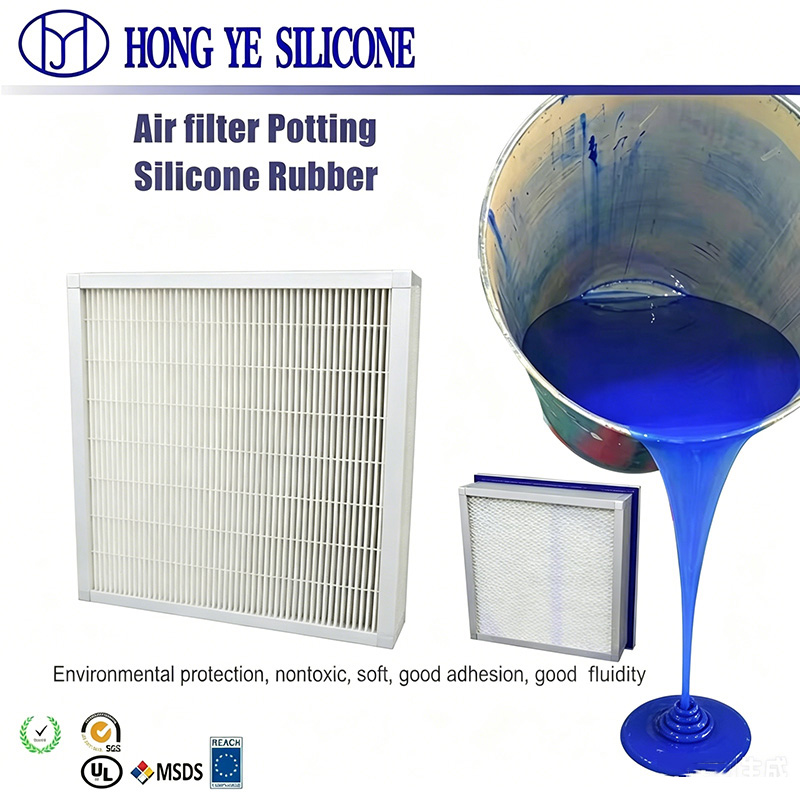
SPF (specific pathogen elimination) animal laboratories require supply-air HEPA filtration rated H14 or above to maintain a controlled micro-environment without airborne pathogens that could compromise research integrity. The filter frame typically uses a knife-edge design that inserts into a liquid tank filled with sealant gel, forming a zero-leak barrier between the clean supply side and the animal housing zone. Traditional EPDM gaskets compress over time and lose resilience in the humid, ammonia-rich atmosphere generated by animal bedding and urine, leading to micro-leaks that compromise barrier integrity. Addition-cure platinum silicone jelly gel solves this by forming a soft, self-healing seal that wraps around the knife edge and recovers after each filter change. The 1:1 mix ratio, 20 to 40 minute pot life, and 4 to 6 hour cure at room temperature allow on-site filling without special tooling. Because the gel is chemically inert and low-VOC, it does not off-gas into the animal environment or interfere with ventilation balance testing protocols required by accreditation assessors. Its blue color provides visual confirmation of fill level and cure uniformity during commissioning inspections. This approach is widely adopted in accredited animal research facilities.
PRODUCT REQUIREMENTS
In SPF animal lab HEPA knife-edge tank seal service the gel must: maintain seal integrity in 20 to 30 degrees Celsius and 60 to 80 percent RH air containing trace ammonia and organic amines from animal waste; withstand repeated knife-edge insertion and withdrawal during quarterly or semi-annual filter changes without tearing or channeling; adhere durably to stainless steel and aluminum tank walls without primer application; remain soft and self-healing so micro-cuts close within hours; exhibit low VOC and low odor to avoid contaminating the animal breathing zone; be visually distinguishable with blue tint for fill-level inspection during commissioning; comply with RoHS 2.0 and REACH SVHC for facility documentation; and maintain performance through multiple filter life cycles without gel replacement. It should further tolerate intermittent peaks near 35 degrees Celsius and short periods of condensation, resist dilute disinfectants such as quaternary ammonium salts, hydrogen peroxide and 70 percent ethanol used in routine room decontamination, show no hardening or tack loss after thousands of hours of aging, and keep airflow leakage below the acceptance threshold during differential-pressure fluctuation and fan vibration. After repeated decontamination cycles the surface should remain smooth without blooming residue, and the gel should not interfere with smoke or airflow visualization studies. Unopened kits should offer at least twelve months of shelf stability, and cured performance should remain warrantable over five or more years of service without shrinkage below the knife-edge immersion depth. The cured material should also resist creep under the gentle static head of the filled channel and maintain the designed fill profile after years of service, while keeping its surface tack stable enough to prevent any air path forming along the knife edge during normal breathing of the ventilation system.
CORRESPONDING PRODUCT MODEL PARAMETERS
Recommended model: HY-9400 - Blue high-tack grade for HEPA/ULPA filter gel channels and animal lab biosafety seals requiring strong adhesion and repeated re-seal after filter changes.
|
Model |
Color |
Viscosity (mPa.s) |
Operation Time (min) |
Cure Time (hr) |
Penetration (0.1mm) |
Tack |
Mix Ratio |
Density (g/cm3) |
|
HY-9400 |
Blue |
1200+/-300 |
20-40 |
4-6 |
200+/-30 |
High |
1:1 |
0.98 |
GRADE SELECTION GUIDE
HY-9400 is blue, with a penetration of 200 (0.1 mm) and high tack. It is the typical choice for HEPA/ULPA filter gel channels, biosafety cabinet seals, and applications requiring strong adhesion and re-sealability.
HY-9405 is blue, with a penetration of 170 (0.1 mm) and medium tack. It suits electronic potting, sensor encapsulation, and applications balancing softness and dimensional stability.
HY-9409 is transparent, with a penetration of 150 (0.1 mm) and low tack. It is used for transparent gel pads, intimate apparel, prosthetic devices, and applications requiring visual clarity or easy repositioning.
FREQUENTLY ASKED QUESTIONS
Q: Can the silicone gel withstand ammonia vapor from animal cage waste without degrading?
A: Yes. Addition-cure platinum silicone gel is chemically inert once fully cured. It resists dilute ammonia, organic amines, and humidity typical of SPF animal rooms without swelling, softening, or loss of adhesion. Long-term exposure tests show no measurable degradation in seal performance after 12 months in simulated animal facility conditions.
Q: How do we change the HEPA filter in a gel-sealed tank without damaging the gel?
A: Lift the filter frame straight up; the knife edge separates cleanly from the gel because the gel self-heals around the cut path. Inspect the gel surface, remove any debris, and insert the new filter. The gel recovers its seal within minutes. No resealing compound or primer is needed between filter changes, which typically occur every 6-12 months.
Q: How does the cost of silicone gel compare with polyurethane gel and EPDM gaskets for animal lab HEPA seals?
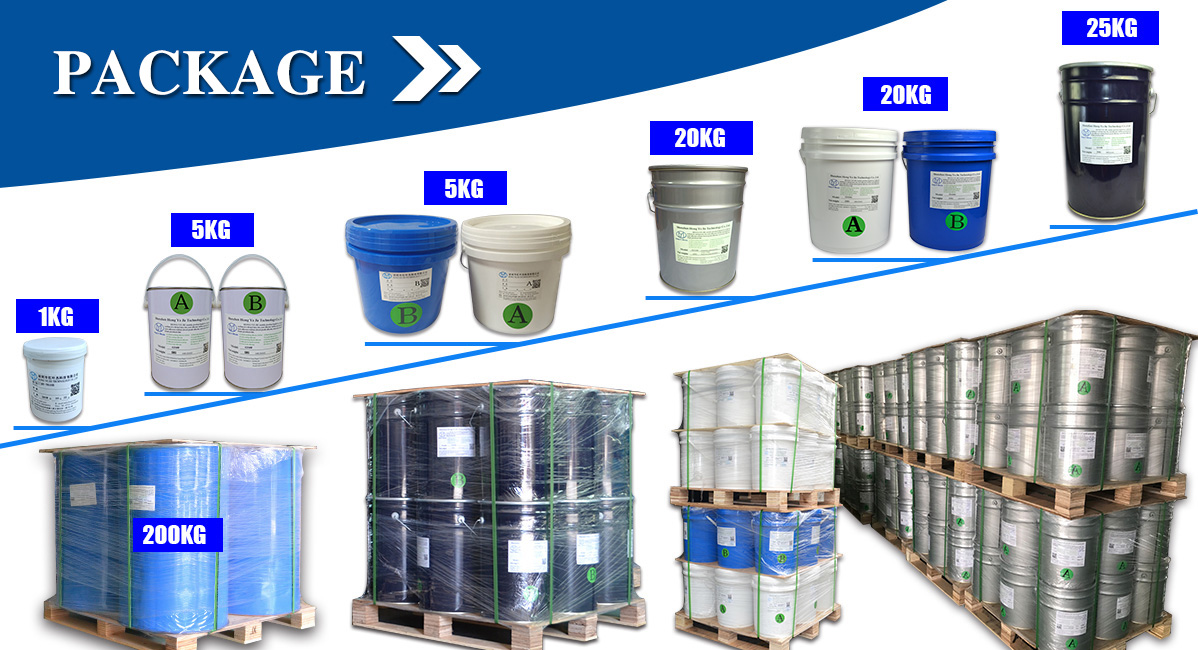
A: Silicone gel costs slightly more per kilogram than polyurethane gel but lasts 3-5 filter-change cycles without replacement, while EPDM gaskets must be replaced every change. Total lifecycle cost per seal point is lower for silicone gel. Packaging options include 1 kg and 5 kg kits for small projects and 20 kg or 25 kg pails for large facility builds, with typical lead time of 7-15 days from Chinese manufacturers.
QUALITY ASSURANCE & CERTIFICATION
Every batch of Hong Ye HY-94 series jelly gel is produced under ISO 9001 certified quality management in a dedicated silicone workshop, with incoming raw-material inspection, in-process mixing control and finished-product testing on every batch. Before release each lot is checked for viscosity, mix ratio, cure time, penetration, color and tack, and a Certificate of Analysis (COA) listing the actual measured values ships with every order. Standard grades carry RoHS 2.0 and REACH SVHC test reports; skin-contact and baby-care grades can be supplied with FDA 21 CFR 177.2600 and LFGB Section 30/31 reports and, on request, ISO 10993 biocompatibility testing; flame-retardant grades meet UL94 V-0. Food-contact, medical and export orders are supported by the corresponding compliance files for customer qualification. Hong Ye has manufactured and supplied jelly gel to contractors, filter builders and equipment makers in over 60 countries since 2005, with monthly capacity above 500 tons, batch traceability and multi-language documentation. Application engineers provide grade selection, sample evaluation, on-site or video pouring guidance and after-sales follow-up, and technical data sheets (TDS), safety data sheets (SDS) and test reports are available before order to support tender and audit processes.
CONCLUSION
The market for tank sealant jelly gel in this application area continues to expand as cleanroom construction, electronic encapsulation, automotive electrification, energy storage and consumer product manufacturing drive demand for reliable two-component addition-cure silicones. Hong Ye supports this growth with ISO 9001 certified production, 500-plus ton monthly capacity, complete compliance documentation and responsive application engineering. Buyers evaluating suppliers are advised to look beyond unit price and compare batch-to-batch consistency, documentation completeness, delivery stability and technical service responsiveness, because the cost of a sealing or potting failure - rework, downtime, certification delay or product recall - far exceeds the incremental cost of a quality gel. Choosing the correct grade for the channel, operating temperature and service environment, following the 1:1 mixing and pouring procedure and validating with a small trial batch all help secure a durable seal. Hong Ye welcomes sample requests and application enquiries; our engineers will recommend the HY-9400, HY-9405 or HY-9409 grade that matches the sealing or potting requirement and support qualification from first sample through volume production.
 ∷