Research Growth Expands Fume Hood Gel
INTRODUCTION
The global laboratory fume hood market is growing steadily at 5 to 6 percent CAGR, driven by increased research investment in pharmaceuticals, materials science, and chemical engineering, combined with stricter occupational exposure limits for laboratory chemicals under OSHA, COSHH, and equivalent national regulations updated since 2022. Laboratory furniture OEMs and facility specifiers are specifying gel-sealed exhaust filters as a key differentiator because field data from universities and corporate R&D centers shows longer seal life, fewer failed containment tests, and reduced maintenance call-backs compared to gasket-sealed designs. Procurement teams benefit from simplified supply chains where one gel product replaces multiple gasket SKUs for different filter sizes and configurations. Chinese silicone manufacturers offer consistent quality at competitive pricing with ISO 9001 certification and monthly capacity above 500 tons, supporting both OEM integration into new hood production lines and aftermarket retrofit for existing installations across laboratories in 60-plus countries spanning academic, government, and private sector research environments worldwide. For facilities managing multiple research buildings, standardizing on gel-sealed exhaust systems reduces spare parts inventory and creates consistent maintenance procedures across all laboratory locations. This approach improves operational efficiency.
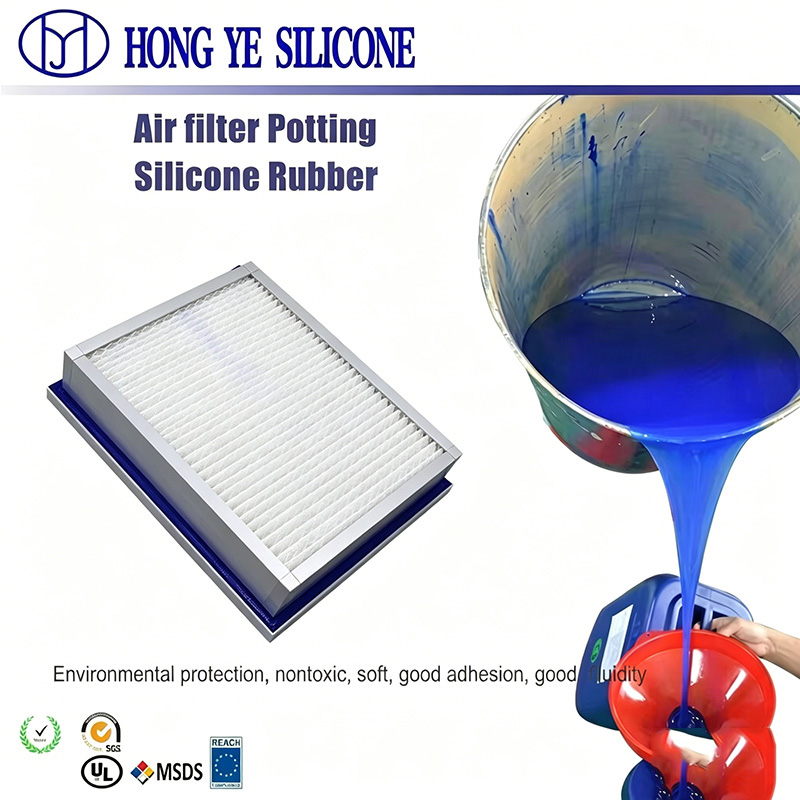
PRODUCT REQUIREMENTS
In fume hood exhaust HEPA tank service the gel must: maintain seal integrity while exposed to trace vapors of hydrochloric, nitric and sulfuric acids, ammonia, alcohols and common organic solvents, without swelling, softening or tack loss; tolerate intermittent exhaust temperature peaks up to about 80 degrees Celsius; remain sealed under sustained negative duct pressure and fan vibration; resist corrosion of stainless steel and coated steel tank surfaces while adhering without primer; self-heal after knife-edge withdrawal and support filter replacement only after appropriate decontamination; shed minimal particles; carry RoHS and REACH documentation; and retain stable penetration after long-term aging, ensuring containment of hazardous exhaust throughout repeated airflow and chemical-exposure cycles. The gel should resist cumulative exposure to mixed chemical atmospheres, including situations where acids and solvents are used simultaneously, without additive extraction or surface tackiness change. It should remain intact through sash movement vibration and exhaust fan speed changes, and it should not emit interfering odors into laboratory rooms when exhaust temperature rises. Decommissioned gel should be removable by mechanical means without aggressive solvents. The gel should remain effective when fume hoods handle intermittent warm exhaust from heated experiments and should not absorb colored indicator vapors that could obscure inspection. It should maintain contact with tanks even after years of slight sash-induced frame movement and fan-speed modulation.
CORRESPONDING PRODUCT MODEL PARAMETERS
Recommended model: HY-9400 - Blue high-tack grade for fume hood exhaust HEPA filter gel channels requiring broad chemical resistance and self-healing seal after filter changes.
|
Model |
Color |
Viscosity (mPa.s) |
Operation Time (min) |
Cure Time (hr) |
Penetration (0.1mm) |
Tack |
Mix Ratio |
Density (g/cm3) |
|
HY-9400 |
Blue |
1200+/-300 |
20-40 |
4-6 |
200+/-30 |
High |
1:1 |
0.98 |
GRADE SELECTION GUIDE
HY-9400 is blue, with a penetration of 200 (0.1 mm) and high tack. It is the typical choice for HEPA/ULPA filter gel channels, biosafety cabinet seals, and applications requiring strong adhesion and re-sealability.
HY-9405 is blue, with a penetration of 170 (0.1 mm) and medium tack. It suits electronic potting, sensor encapsulation, and applications balancing softness and dimensional stability.
HY-9409 is transparent, with a penetration of 150 (0.1 mm) and low tack. It is used for transparent gel pads, intimate apparel, prosthetic devices, and applications requiring visual clarity or easy repositioning.
FREQUENTLY ASKED QUESTIONS
Q: How does silicone gel resist the mixed chemical vapors in a fume hood exhaust better than neoprene gaskets?
A: The silicone polymer backbone (Si-O-Si) is inherently more resistant to chemical attack than organic elastomers like neoprene or nitrile. Dilute acid vapors, ketones, and alcohols that cause neoprene to harden and crack within 6-12 months show no measurable effect on cured silicone gel after 24 months of continuous exposure in laboratory fume hood exhaust service.
Q: Is it safe for lab staff to replace the exhaust filter in a gel-sealed fume hood?
A: Yes. The gel self-heals immediately when the old filter frame is lifted out, sealing any residual chemical path. The new filter is inserted into the same gel channel, and the gel wraps around the knife edge within minutes. Staff are not exposed to leaked exhaust air during the change because the gel maintains seal continuity throughout the process. The blue color lets them visually confirm complete seal before returning the hood to service.
Q: What should laboratory furniture OEMs consider when switching from gaskets to gel seal in their fume hood designs?
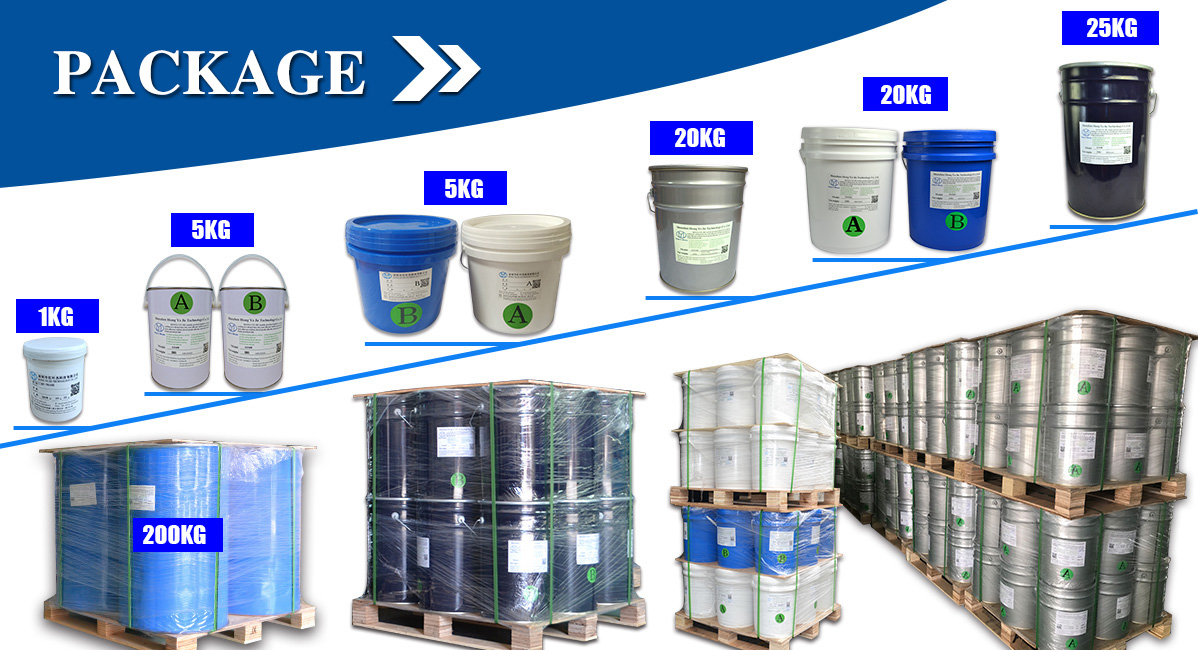
A: The gel fills the same groove geometry designed for gaskets, so no housing redesign is needed. OEMs benefit from reduced assembly time (no gasket cutting or positioning), fewer warranty claims from failed containment tests, and a single SKU covering all filter sizes. Product is available in 5 kg and 20 kg packaging for OEM production lines, with lead time 7-10 days from ISO 9001 certified manufacturers.
QUALITY ASSURANCE & CERTIFICATION
Every batch of Hong Ye HY-94 series jelly gel is produced under ISO 9001 certified quality management in a dedicated silicone workshop, with incoming raw-material inspection, in-process mixing control and finished-product testing on every batch. Before release each lot is checked for viscosity, mix ratio, cure time, penetration, color and tack, and a Certificate of Analysis (COA) listing the actual measured values ships with every order. Standard grades carry RoHS 2.0 and REACH SVHC test reports; skin-contact and baby-care grades can be supplied with FDA 21 CFR 177.2600 and LFGB Section 30/31 reports and, on request, ISO 10993 biocompatibility testing; flame-retardant grades meet UL94 V-0. Food-contact, medical and export orders are supported by the corresponding compliance files for customer qualification. Hong Ye has manufactured and supplied jelly gel to contractors, filter builders and equipment makers in over 60 countries since 2005, with monthly capacity above 500 tons, batch traceability and multi-language documentation. Application engineers provide grade selection, sample evaluation, on-site or video pouring guidance and after-sales follow-up, and technical data sheets (TDS), safety data sheets (SDS) and test reports are available before order to support tender and audit processes.
CONCLUSION
The market for tank sealant jelly gel in this application area continues to expand as cleanroom construction, electronic encapsulation, automotive electrification, energy storage and consumer product manufacturing drive demand for reliable two-component addition-cure silicones. Hong Ye supports this growth with ISO 9001 certified production, 500-plus ton monthly capacity, complete compliance documentation and responsive application engineering. Buyers evaluating suppliers are advised to look beyond unit price and compare batch-to-batch consistency, documentation completeness, delivery stability and technical service responsiveness, because the cost of a sealing or potting failure - rework, downtime, certification delay or product recall - far exceeds the incremental cost of a quality gel. Choosing the correct grade for the channel, operating temperature and service environment, following the 1:1 mixing and pouring procedure and validating with a small trial batch all help secure a durable seal. Hong Ye welcomes sample requests and application enquiries; our engineers will recommend the HY-9400, HY-9405 or HY-9409 grade that matches the sealing or potting requirement and support qualification from first sample through volume production.
CONTACT US
SHENZHEN HONG YE JIE TECHNOLOGY CO., LTD — Silicone Rubber Manufacturer, 23 Years
Contact: Kimi (Sales)
Mobile / WhatsApp / WeChat: 0086-18938867594
Email: hyjd@szrl.net
Website: www.szrl.net
Address: Building A, No.3, Hongling First Road, Liulian Shibi, Pingdi Street, Longgang District, Shenzhen, China
 ∷