Why HEPA Filter Manufacturers Are Switching to Blue Jelly Ta
From a technical standpoint, three parameters decide whether a jelly gel will survive a multi-year project: viscosity, which controls flow into narrow channels; penetration, which describes softness and conformability; and surface tack, which determines whether the gel can reseal after service. Engineers should match all three to the actual geometry and service cycle.
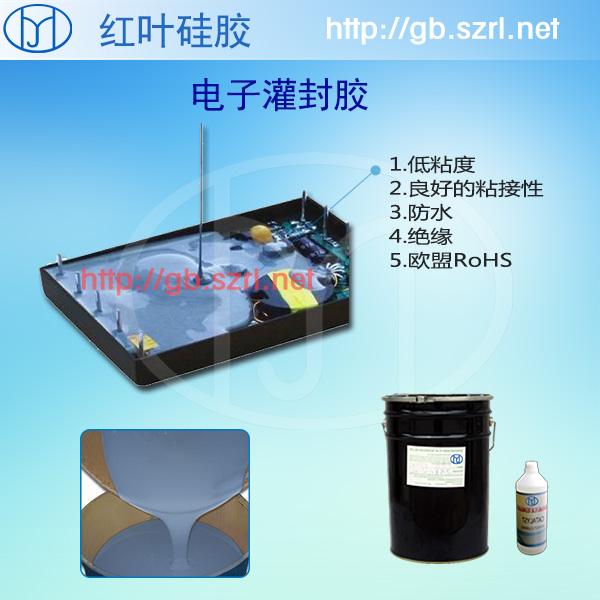
In practice, HY-9400 is most commonly used for knife-edge gel channels of ducted HEPA filter housings in cleanroom ceilings. The product is a two component addition cure platinum catalyzed jelly gel supplied at a 1:1 mix ratio, with viscosity of 1200 to 2200 mPa.s depending on grade. After mixing and pouring, it self-levels into the gel channel and cures at room temperature into a soft, permanently tacky mass that feels similar to premium imported gels.
Compared with conventional mechanical gaskets, HY-9400 offers four distinct advantages:
-
It conforms to dimensional tolerances of the knife edge and channel, eliminating leak paths that gaskets cannot seal
-
It self-heals after the filter is lifted and reinserted, reducing consumable cost during filter replacement
-
It requires no compressed tooling or fastening force, lowering the structural requirement on filter housings
-
It can be reworked simply by topping up fresh gel, rather than tearing out an aged gasket
Typical penetration of HY-9400 is 200+/-30 (0.1mm), which gives enough compliance to absorb knife edge tolerances without squeezing out of the channel during filter installation.
Engineers should also note that HY-9400 is part of an addition cure system and must be kept away from sulfur, nitrogen, phosphorus and tin contaminants such as natural latex gloves, certain PVC hoses and uncured condensation cure silicone. These contaminants can inhibit the platinum catalyst and cause sticky or uncured spots. Using dedicated tools, polyethylene or nylon gloves, and accurate 1:1 weighing by weight will deliver consistent results from the first kilogram to the two hundred kilogram drum.
The recommended pour thickness for HY-9400 is 15 to 25 millimeters; thinner layers risk incomplete coverage and thicker layers waste material without improving sealing.
For buyers, total cost of ownership matters more than unit price. A single 20 kilogram pail of HY-9400 typically seals 60 to 100 standard 610 by 610 millimeter HEPA filter channels, depending on channel depth. Combined with zero field leak claims and a 12 month shelf life, the return on investment is significantly better than low cost alternatives that often require rework within the first heating and cooling season.
Hong Ye Silicone supports customers with free 1 kilogram sample kits, full technical data sheets, RoHS and REACH reports, and on-site pouring guidance for volume projects. Custom colors, adjusted penetration and food-contact grade formulations are available with a minimum order of 20 kilograms, and typical lead time is 7 to 10 working days after deposit.
 ∷
∷