Experienced Liquid Silicone Rubber Source Factory How to Choo
Buyers ask for a source factory to cut out a layer of margin and a layer of confusion. Both reasons are sound, but the phrase itself describes nothing you can inspect. What can be inspected is a set of behaviours that only a maker tends to have.
Here is what to look for when you shortlist a liquid silicone rubber source factory.
Starting With the Grade, Not the Company
Liquid silicone rubber covers a wide band: hardness from 10 to 50 Shore A, mixing ratios of 1:1 and 10:1, and two cure systems with very different behaviour. Platinum catalysed, or addition cure, gives off no by-products; condensation cure is cheaper and less stable in service.
So the first question is not "are you a factory" but "which grade do you propose, and why". A maker can answer that with reference to your master pattern, your casting material and your cycle count. A reseller often can only quote what is in stock.
Evidence You Can Check Before Ordering
A model code that tracks the grade. Quotations that name the grade, the hardness and the mixing ratio can be compared line by line with the documents.
Documents attached to the grade. Declarations and test reports follow a grade, not a company letterhead. Ask which code appears on the paper.
Batch retention. A factory that keeps samples from each run can trace a complaint to a production batch, which is the difference between a correction and a long conversation.
A master pattern question. Sulphur, tin and some modelling clays inhibit platinum cure. A supplier that asks what your master is made of, before recommending a grade, is telling you who does the technical work.
|
What you want to check |
What to ask |
What a maker answers |
|
Grade fit |
which grade for deep relief at 30 Shore A |
a grade, a hardness and a reason |
|
Documentation |
which document covers that grade |
a code and a revision |
|
Batch control |
how hardness is verified between runs |
a tolerance and a sample record |
|
Trial support |
can you supply 10kg for a mould trial |
yes, with a lead time |

The Trial Is the Real Comparison
Two suppliers can show identical paperwork and still behave differently in a mould. The way to see it is a controlled trial: one master, one mixing ratio, one room, three casts.
Record set time, release behaviour and surface finish after each cast. The third casting is where differences appear, particularly on thin edges and in deep relief. Export buyers commonly start at 10kg, which is enough for a working mould and a week of casting.
Questions That Separate a Plant From a Desk
Ask how hardness is checked between batches and what is kept from each run. Ask which grade suits a cold workshop in winter. Ask whether a particular master material needs a sealer before pouring.
Answers to those three sort the field quickly. One group describes its process; the other describes its capacity.
Where Price Fits in the Decision
Price belongs after the grade, the documents and the trial, not before them. Comparing quotations earlier than that means comparing incomplete offers: a cheaper grade that tears at the mould edge costs more per casting than a firmer one that lasts, and a grade without the right paperwork for an export order costs a delay on top.
There is one legitimate price question to ask early. Ask what the minimum trial quantity is, because a supplier who can ship 10kg for a mould trial is set up for buyers who validate before they scale.
A Note on Working With a Smaller Plant
Buyers sometimes assume a smaller plant means a compromise. It can also mean the opposite: fewer grades, described more precisely, and a technical conversation with the person who mixes the material.
What matters is not the size of the operation but whether the answers are specific. A small plant that can talk about your master pattern, your casting material and your cycle count is more useful than a large one that can only talk about stock levels.
Counting the Cost of a Substitution
Source factories are sometimes asked to match a cheaper offer from elsewhere. The comparison rarely holds, because the two materials are being judged on one number.
What actually differs shows up later: a cure speed that shifts with the season, a hardness that drifts by a few points between runs, or a grade that needs a different ratio than the one your workshop is calibrated for. Each of those costs production time rather than material cost, and production time is the expensive part.
The useful question is not which supplier is cheaper per kilogram, but what a point of hardness drift costs you in rejected castings.
Before You Commit to Volume
Agree four things in writing: the grade code and hardness, the packaging format, how batches are identified, and what notice you receive before a formulation changes. With those fixed, price and lead time are easier to settle, because both sides know what is being repeated.
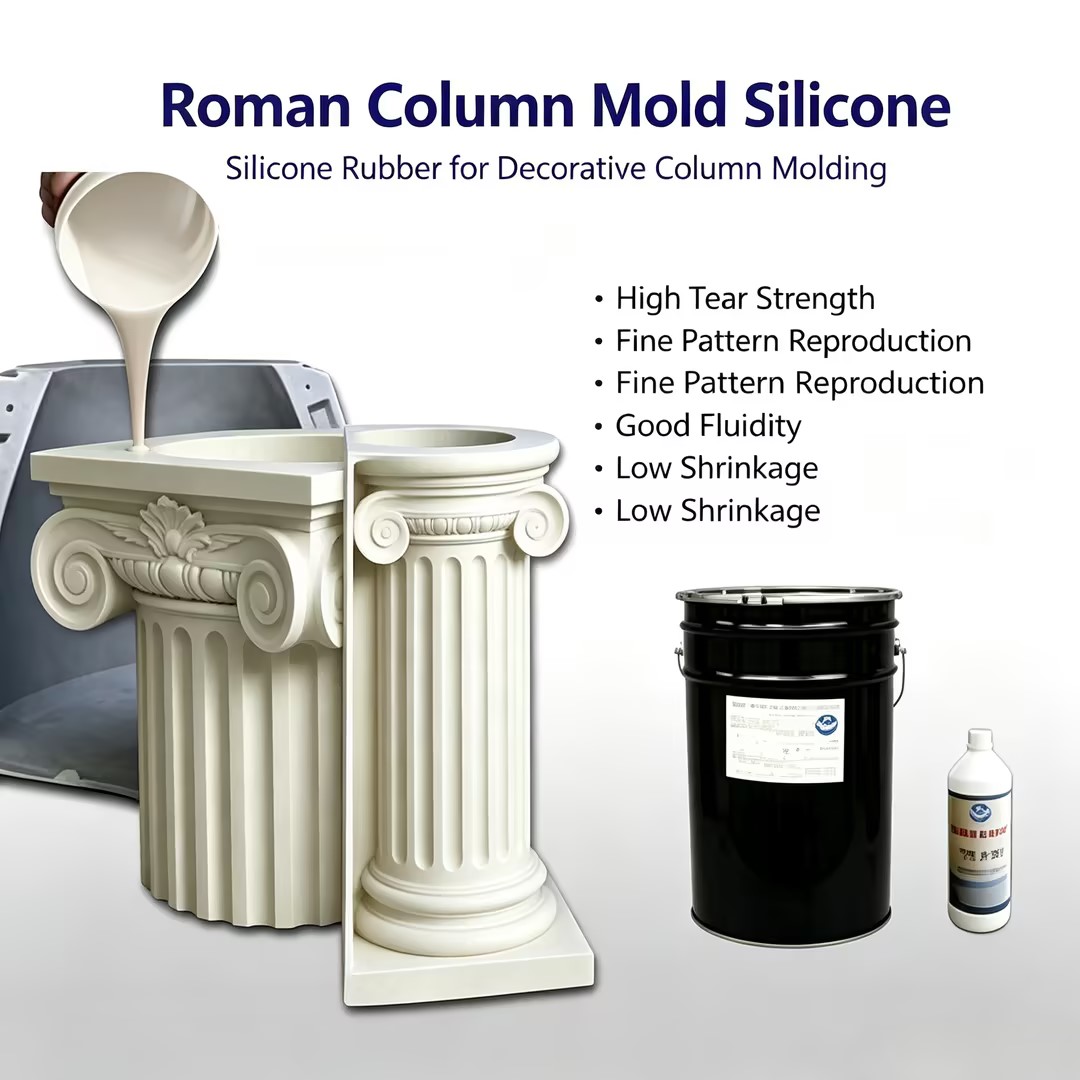
Shenzhen Hong Ye Jie Technology makes addition curing platinum silicone rubber across the 10 to 50 Shore A band, answers grade questions from the production side, keeps a retained sample of every batch, casts a pre-production sample against the buyer's master, and inspects goods before dispatch. Trial quantities start at 10kg.
 ∷
∷