Automotive Paint Shop Ceiling Filter Gel
INTRODUCTION
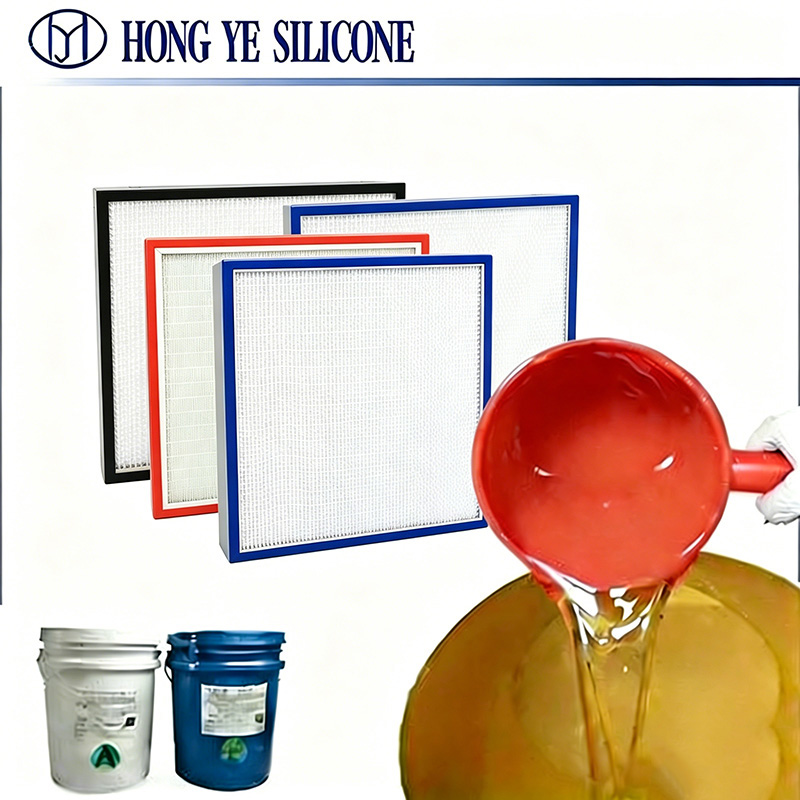
Automotive and industrial paint booths require a controlled supply of filtered air at precise temperature and humidity to ensure coating quality. The air make-up unit draws outside air through multiple filter stages, from pre-filters capturing large particles to ceiling media filters (commonly called ceiling cotton or ceiling media) rated to capture particles down to 5-10 microns that would cause surface defects in wet paint. The filter frames sit in a grid within the make-up unit plenum, and any bypass gap between the frame and the grid allows unfiltered air carrying dust, fibers, or overspray particles to reach the booth, creating pinholes, fisheyes, or inclusions that require costly rework. Traditional gaskets in this environment face dual challenges: paint overspray builds up on gasket surfaces and cures hard, breaking the seal when filters are changed, and solvent vapors from the booth atmosphere attack organic rubber gaskets causing them to swell and lose shape. Addition-cure platinum silicone jelly gel creates a seal that resists paint overspray adhesion (overspray peels off silicone surfaces easily), withstands solvent vapor exposure, and self-heals when filters are changed for seasonal maintenance.
PRODUCT REQUIREMENTS
In paint shop ceiling filter service the gel must: maintain a uniform seal at around 20 to 30 degrees Celsius with peaks near 50 to 60 degrees Celsius and high summer humidity; resist trace paint overspray, solvents, thinners and curing-agent vapors without swelling or tack loss; adhere to galvanized and aluminum frames under steady airflow pressure; contain ultra-low volatile siloxane and particle release to avoid cratering and fisheye defects in paint films; absorb fan vibration without channeling; remain re-enterable for filter changes during short maintenance windows; show no oil bleed; carry RoHS and REACH documentation; and retain stable penetration after long-term aging, keeping bypass dust below the cleanliness class required by the paint line. The gel should remain stable near paint-line curing ovens where elevated air temperatures can travel into supply ducting, and it should not interact with fragrance or solvent residues in recycled air. It should allow rapid filter exchanges during color changeover and maintenance stops, and it should retain uniform physical properties batch after batch so fill volume and seal contact remain predictable on production lines. The gel should resist drying near heated make-up air sections and should remain stable during the high airflow velocities of spray booth operation. It should not shed particles when maintenance staff temporarily lift filter frames and should maintain sealing consistency across both new paint lines and renovated booths.
CORRESPONDING PRODUCT MODEL PARAMETERS
Recommended model: HY-9400 - Blue high-tack grade for paint booth ceiling filter gel channels and air make-up unit seals requiring overspray release and solvent vapor resistance.
|
Model |
Color |
Viscosity (mPa.s) |
Operation Time (min) |
Cure Time (hr) |
Penetration (0.1mm) |
Tack |
Mix Ratio |
Density (g/cm3) |
|
HY-9400 |
Blue |
1200+/-300 |
20-40 |
4-6 |
200+/-30 |
High |
1:1 |
0.98 |
GRADE SELECTION GUIDE
HY-9400 is blue, with a penetration of 200 (0.1 mm) and high tack. It is the typical choice for HEPA/ULPA filter gel channels, biosafety cabinet seals, and applications requiring strong adhesion and re-sealability.
HY-9405 is blue, with a penetration of 170 (0.1 mm) and medium tack. It suits electronic potting, sensor encapsulation, and applications balancing softness and dimensional stability.
HY-9409 is transparent, with a penetration of 150 (0.1 mm) and low tack. It is used for transparent gel pads, intimate apparel, prosthetic devices, and applications requiring visual clarity or easy repositioning.
FREQUENTLY ASKED QUESTIONS
Q: Will paint overspray stick to the silicone gel and make filter changes difficult?
A: No. Cured silicone gel has a low-surface-energy surface that paint overspray does not bond to strongly. When the ceiling media filter is lifted for replacement, overspray flakes peel off the gel surface easily. The gel underneath remains clean and self-heals for the new filter. This is a key advantage over rubber gaskets where overspray bonds firmly and must be scraped off.
Q: How do we retrofit gel seal into an existing paint booth with gasket-sealed filter grids?
A: Remove the old gasket strips and clean the grid channels of paint buildup and residue. Apply the 1:1 mixed gel into the channels, insert the filter frames, and allow 4-6 hours cure before starting the booth. The gel flows into welding seams and irregularities that gaskets cannot seal. No booth modification is required. Maintenance teams report that the retrofit takes one shift per booth during scheduled seasonal filter changes.
Q: What is the ROI for an automotive plant switching to gel-sealed filter grids across 10 paint booths?
A: If each booth produces 2-3 particle defects per shift at 100-150 USD rework cost each, the annual defect cost per booth is approximately 50,000-100,000 USD. Gel seal reduces bypass-related defects by over 90 percent. Across 10 booths, annual savings of 450,000-900,000 USD in rework alone pay for the gel material and installation labor many times over. The investment typically pays back within 2-3 months.
QUALITY ASSURANCE & CERTIFICATION
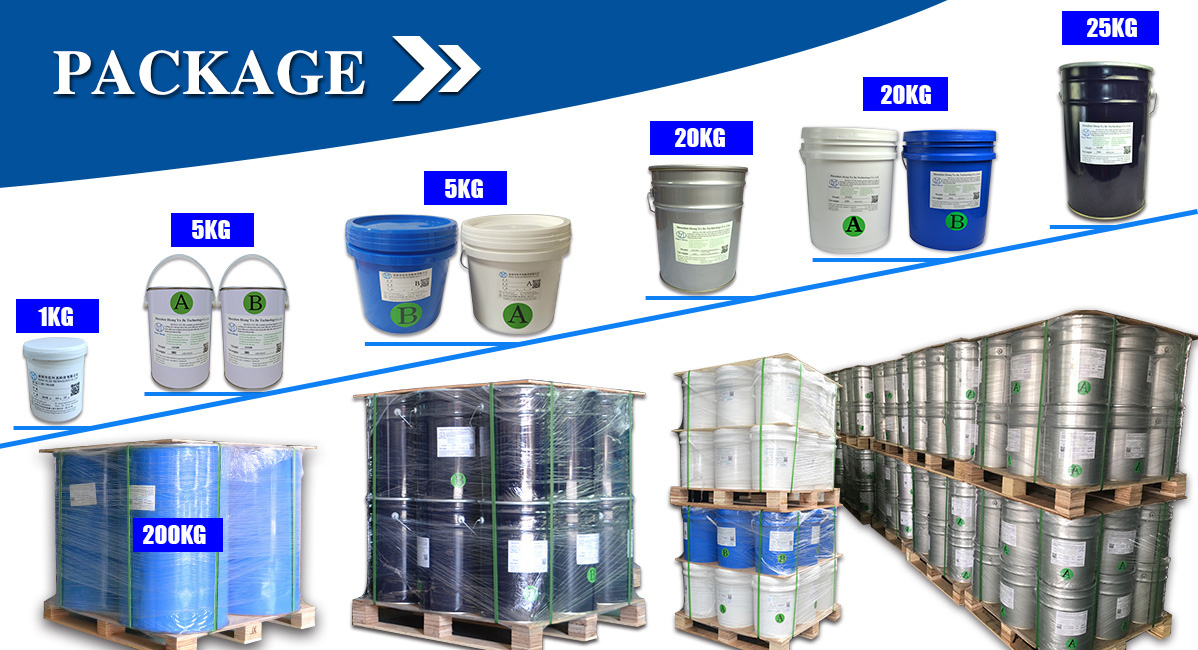
Every batch of Hong Ye HY-94 series jelly gel is produced under ISO 9001 certified quality management in a dedicated silicone workshop, with incoming raw-material inspection, in-process mixing control and finished-product testing on every batch. Before release each lot is checked for viscosity, mix ratio, cure time, penetration, color and tack, and a Certificate of Analysis (COA) listing the actual measured values ships with every order. Standard grades carry RoHS 2.0 and REACH SVHC test reports; skin-contact and baby-care grades can be supplied with FDA 21 CFR 177.2600 and LFGB Section 30/31 reports and, on request, ISO 10993 biocompatibility testing; flame-retardant grades meet UL94 V-0. Food-contact, medical and export orders are supported by the corresponding compliance files for customer qualification. Hong Ye has manufactured and supplied jelly gel to contractors, filter builders and equipment makers in over 60 countries since 2005, with monthly capacity above 500 tons, batch traceability and multi-language documentation. Application engineers provide grade selection, sample evaluation, on-site or video pouring guidance and after-sales follow-up, and technical data sheets (TDS), safety data sheets (SDS) and test reports are available before order to support tender and audit processes.
CONCLUSION
The market for tank sealant jelly gel in this application area continues to expand as cleanroom construction, electronic encapsulation, automotive electrification, energy storage and consumer product manufacturing drive demand for reliable two-component addition-cure silicones. Hong Ye supports this growth with ISO 9001 certified production, 500-plus ton monthly capacity, complete compliance documentation and responsive application engineering. Buyers evaluating suppliers are advised to look beyond unit price and compare batch-to-batch consistency, documentation completeness, delivery stability and technical service responsiveness, because the cost of a sealing or potting failure - rework, downtime, certification delay or product recall - far exceeds the incremental cost of a quality gel. Choosing the correct grade for the channel, operating temperature and service environment, following the 1:1 mixing and pouring procedure and validating with a small trial batch all help secure a durable seal. Hong Ye welcomes sample requests and application enquiries; our engineers will recommend the HY-9400, HY-9405 or HY-9409 grade that matches the sealing or potting requirement and support qualification from first sample through volume production.
CONTACT US
SHENZHEN HONG YE JIE TECHNOLOGY CO., LTD — Silicone Rubber Manufacturer, 23 Years
Contact: Kimi (Sales)
Mobile / WhatsApp / WeChat: 0086-18938867594
Email: hyjd@szrl.net
Website: www.szrl.net
Address: Building A, No.3, Hongling First Road, Liulian Shibi, Pingdi Street, Longgang District, Shenzhen, China
 ∷