Liquid Silicone Foam Empowers Impact Protection
Driven by the rapid growth of professional sports, outdoor recreation and workplace safety requirements, the market for protective equipment materials has expanded steadily. Helmets, knee and elbow pads, chest guards, sports mats and industrial safety gear require materials that absorb impact, distribute pressure, reduce weight and stay comfortable — all while meeting increasingly strict safety certification standards. As athletes and workers demand gear that performs after repeated impacts, designers increasingly adopt high-performance foam materials for liners, padding and cushioning layers. Protective equipment manufacturers have raised higher standards on material impact absorption, rebound consistency and long-term durability. As a core protection material, liquid silicone foam from Hong Ye Silicone gains increasing importance in the safety equipment supply chain.
Sports and protective equipment have special working conditions. Helmets and pads must absorb energy from repeated impacts, recover their shape and maintain protection after every fall, and they must also resist sweat, moisture and temperature changes during intense use. Conventional expanded polystyrene and polyurethane foams crush permanently after a single collision, absorb moisture and become brittle in cold conditions, while concerns about chemical safety and skin irritation raise further doubts in products worn close to the body. In addition, protective components span complex curved shapes with tight fit requirements. Poor shrinkage control of foam materials will cause inconsistent thickness, uneven protection and comfort problems, and frequent material replacement significantly increases cost for equipment manufacturers.
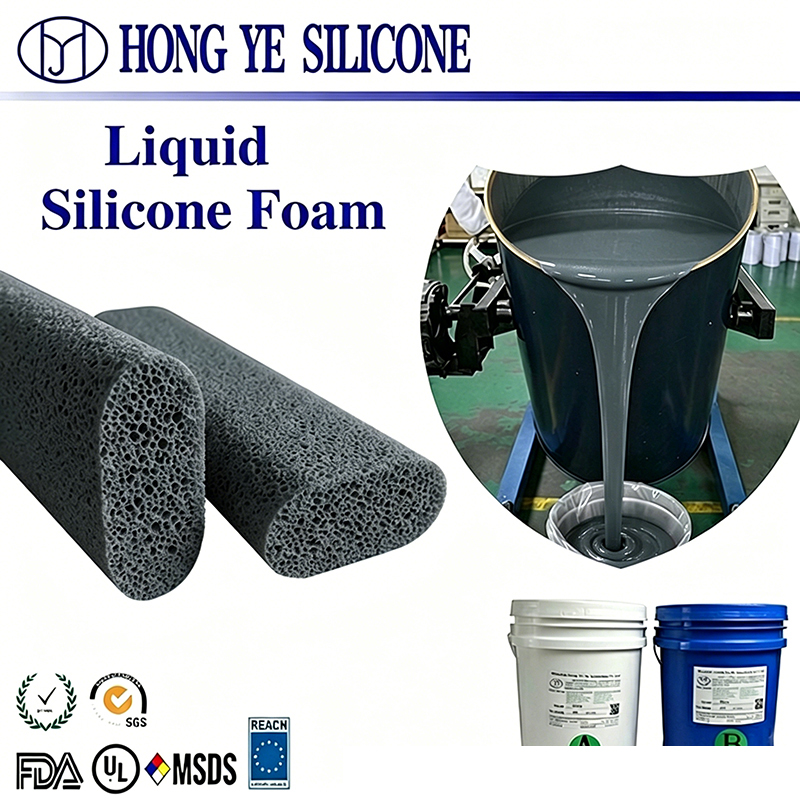
Liquid silicone foam from Hong Ye Silicone is a platinum-cured two-component addition curing silicone rubber with a formula optimized for protective applications. With a high expansion ratio of 2 times nominal and up to 7 times maximum, the material reduces weight and raw material consumption while maintaining reliable impact absorption and cushioning. After mixing and foaming, it forms a uniform closed-cell structure with low linear shrinkage, ensuring stable dimensions after curing. Mass-produced helmet liners, pad inserts and mat layers maintain consistent thickness and density, reducing later adjustment work and ensuring fit precision on the production line.
In terms of mechanical performance, this foamed silicone delivers high rebound resilience and low compression set. Protective equipment undergoes repeated impacts and compression during training and competition, and materials need to recover their shape after every cycle. The high-rebound formula effectively prevents permanent deformation and protection loss. The cured foam also offers excellent temperature tolerance from -65°C to 200°C, moisture resistance, inherent flame retardancy and chemical inertness. Being non-toxic, odorless and skin-friendly, it remains safe for prolonged contact during wear. After long exposure to sweat, sunlight and alternating hot and cold conditions, it resists aging, powdering and performance decay. One component can serve for years, greatly reducing replacement cost for equipment manufacturers and end users.
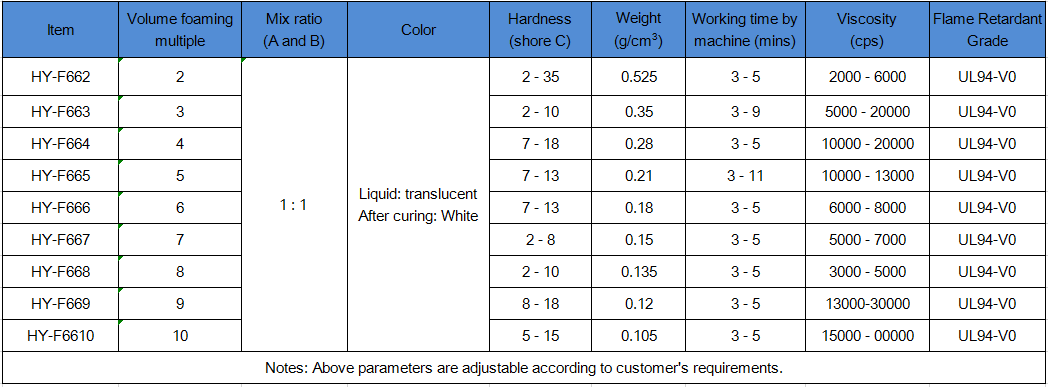
For manufacturing adaptability, this liquid silicone foam supports two mainstream processes: mold casting and continuous dispensing. For complex curved shapes such as helmet liners and multi-layer pads, mold casting is widely adopted. Mixed material is poured or injected into the cavity, foams and cures at ambient or elevated temperature, and demolds as a finished cushioning component. Simple flat layers and sports mats can adopt continuous dispensing, where the two components are metered, mixed and applied directly onto the substrate. The simple 1:1 mixing ratio and stable foaming behavior eliminate complex equipment adjustments. It can be applied by small protective gear workshops as well as large automated sports equipment production bases.
Industry trends show the global sports and safety sector is moving toward higher protection standards and lighter weight. Custom protective material orders from helmet, professional sports and industrial safety projects keep rising. Gear becomes more specialized and shapes more complex. Downstream manufacturers focus not only on raw material price, but also on comprehensive indicators including impact absorption, rebound consistency, skin safety and certification compliance. Hong Ye Silicone keeps optimizing formulas, launching liquid silicone foam grades with different densities, hardness and thickness for applications ranging from thin helmet liners to thick impact mats. Test documents are continuously upgraded to satisfy safety and environmental compliance requirements of domestic and overseas projects.
Industry insiders state that the final protection effect of sports and safety equipment fundamentally depends on material quality. High-performance liquid silicone foam from Hong Ye Silicone helps convert complex impact-absorption and fit designs from product drawings into mass-producible protection components, lowering manufacturing barriers for sophisticated protective gear. In the future, with the continuous advancement of professional sports, outdoor recreation and workplace safety regulations, the market for foamed silicone protection materials will expand further. Foam material technology will keep upgrading to support the safety equipment industry in delivering more reliable and comfortable protection.
 ∷