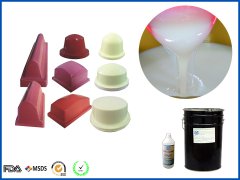
Mass‑Production‑Oriented Bionic Skin Silicone: Optimized
News Overview
With the fast‑growing global humanoid robot and medical simulation market, overseas manufacturers are raising higher standards for silicone raw materials, focusing not only on simulation performance, but also batch repeatability, regulatory compliance and adaptability to automated production. HONG YE SILICONE rolls out optimized robot bionic skin silicone, targeting both prototype R&D and large‑volume commercial manufacturing.
This is two‑component platinum addition‑cured RTV‑2 silicone rubber mixed at 1:1 weight ratio. It can be processed by manual pouring or low‑pressure injection equipment. Three grades cover ultra‑soft, medium‑soft and medium‑hard ranges to match robot skin, prosthetic liner and medical teaching model scenarios. Compared with conventional soft silicone, it effectively reduces batch fluctuation risk during continuous production. Our product portfolio includes mold making silicone, pad printing silicone, electronic potting compound and liquid silicone foam to deliver comprehensive silicone material solutions for global clients.
Key Material Strengths
-
Realistic matte skin‑like texture, fine‑detail reproduction for bionic appearance
-
Wide hardness selection 0A‑30A to fit different component design requirements
-
High tear and elongation property, anti‑crack under repeated joint stretching movement
-
Skin‑safe formula, compliant with FDA, REACH and RoHS for global market access
-
Low shrinkage ≤0.1%, maintaining dimensional stability for thin‑wall skin parts
-
Excellent anti‑aging, UV‑resistance and moisture‑proof performance for long‑term service
-
Customizable skin tone, transparent and translucent colors, good painting compatibility
Real‑World Application Value
The bionic skin silicone serves multiple vertical sectors. For robotics enterprises, it helps realize natural facial expression layers and outer wrapping for service robots. For medical‑device manufacturers, it supports prosthetic liner and various medical simulation mannequin production. For animatronic, film and museum projects, it makes special‑effect prosthetics, wax figures and exhibition simulators.
For international buyers, stable batch performance cuts debugging cost in mass‑production stage; durable material property lowers after‑sales risk of finished goods; formula customization service helps clients realize differentiated terminal products.
Quality Control & Certifications
Manufactured under ISO9001 quality management system, the material passes UL, CE standards and meets FDA skin‑contact requirement. Each lot goes through raw‑material screening, in‑process performance test and pre‑shipment final inspection. Pre‑production sample validation is available before mass order execution.
Customization Service
Hardness tuning within 0A‑30A range, custom skin‑tone and translucent colors are supported. OEM formula service is open for bulk‑order customers.
Handling Tips
Separately stir Part A and Part B before mixing. Mix at 1:1 weight ratio, stir fully and vacuum degas. Room‑temperature pot‑life 30‑40 minutes, full curing 4‑8 hours; heating 60‑80℃ accelerates curing. Keep away from sulfur, tin‑based contaminants to avoid curing poisoning.
FAQ
Q: Is this silicone fit for automated mass‑production line?
A: Formulated for both lab sample and mass manufacturing, with stable batch viscosity; low‑pressure injection processing is supported.
Q: Can you provide compliance documents for customs clearance?
A: Relevant certification documents can be supplied for qualified orders.
Q: What is package and shelf‑life?
A: 5KG, 20KG, 200KG per drum for A/B component; 12‑month shelf‑life under cool dry sealed storage.
 ∷
∷