Silicone Foam Is Redefining Protective Packaging and Logistic
Introduction
Every product, from the moment it leaves the factory to the moment it reaches the customer, faces a journey full of hazards: drops, shocks, vibrations, temperature swings, and crushing pressure. The packaging that protects it is not an afterthought — it is a critical engineering system that determines whether goods arrive intact, whether brands avoid costly returns, and whether supply chains run efficiently. In this invisible battlefield of logistics, liquid silicone foam has emerged as a superior solution, offering protection that conventional packaging materials simply cannot match.
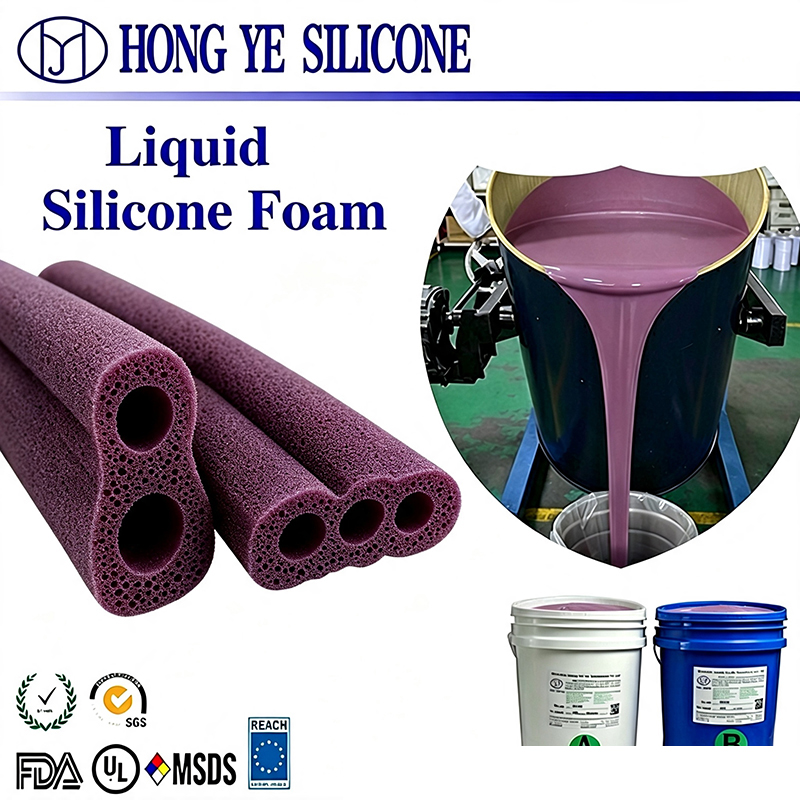
Early Developments
In the early days, protective packaging relied on expanded polystyrene and polyethylene foam. These materials provided basic cushioning but brought significant drawbacks. They crushed and compressed permanently under repeated impact, losing their protective properties after a single drop. They degraded in heat and cold, becoming brittle or soft at exactly the wrong times. They absorbed moisture, adding weight and risking damage to the goods they were meant to protect. And for high-value products — precision electronics, medical devices, delicate instruments — the packaging itself often became the point of failure.
The Platinum Cure Revolution
The introduction of platinum-catalyzed addition-curing silicone foam gave packaging engineers a fundamentally better protective material. Platinum-cured foam recovers its shape after impact, providing consistent cushioning over multiple drops and journeys. Its closed-cell structure resists moisture and maintains its properties across extreme temperatures. Its wide service temperature range protects goods through the hot holds of cargo ships and the freezing holds of aircraft. And its durability means packaging components can be reused — a growing priority in an industry under pressure to reduce waste.
Key Performance Advances
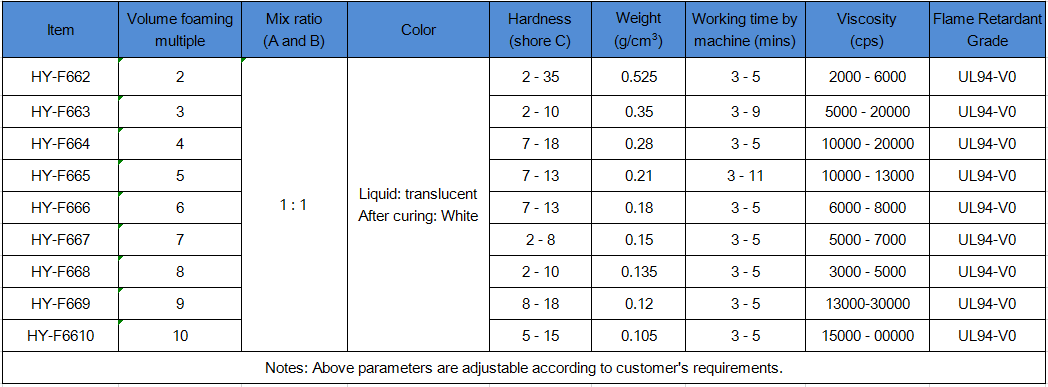
Modern liquid silicone foam grades, such as those produced by Hong Ye Silicone, deliver protection engineered for real logistics environments. The material's excellent rebound resilience absorbs repeated impacts without permanent compression, protecting fragile goods through multiple handling stages. Its high expansion ratio of up to 7 times volume enables lightweight cushioning that minimizes shipping weight and cost. The wide service temperature range of -65°C to 200°C protects temperature-sensitive products in every transport environment. The material's chemical inertness ensures it will not react with packaged goods, while its non-toxic nature makes it safe even for food, pharmaceutical, and cosmetic products.
Application Expansion
Protective silicone foam now serves logistics across a wide range of sectors. In electronics logistics, it cushions precision instruments, displays, and sensitive components during international shipment. In medical device distribution, it protects fragile, high-value equipment where a single damaged unit can cost far more than the packaging. In automotive parts logistics, it isolates and protects components during long supply-chain journeys. In temperature-sensitive shipping, it insulates pharmaceutical and food products against thermal shock. In reusable packaging systems, its durability enables returnable cushioning that survives hundreds of trips — cutting cost and waste across the entire supply chain.
Manufacturing Advancements
Protective packaging demands absolute consistency. Automated production lines, like those operated by Hong Ye Silicone, deliver the tight control over density, cell structure, and cushioning properties that packaging engineers require. ISO9001-certified quality management, comprehensive testing, and final inspection before shipment ensure that every batch provides the same reliable protection — because in logistics, a single inconsistent batch can mean a damaged product, a disappointed customer, and a damaged brand.
Future Directions
The future of protective packaging points toward intelligence and sustainability. Sensor-integrated foam that monitors impacts and temperature during transit, fully recyclable cushioning systems, and ultra-light grades that reduce transport emissions represent the most promising research directions. As e-commerce continues to grow and supply chains become more complex, the demand for packaging that protects goods reliably — and sustainably — will only increase.
Conclusion
In the complex world of modern logistics, the packaging is the first line of defense between a product and the thousands of hazards it faces in transit. Liquid silicone foam has proven itself the most reliable material for that defense — absorbing impact after impact, surviving temperature extremes, and protecting the products that brands stake their reputations on. Companies like Hong Ye Silicone, with decades of formulation expertise and advanced production capability, are helping shippers around the world deliver goods intact — and customers receive them as they were meant to be received.
 ∷
∷